

Frequently asked questions
Everything you need to know about fire suppression — our systems, our process, compliance, and how to get started.
33
Questions answered
6
Topic categories
10+
Years of expertise
4
Accreditations
Browse by topic
Use the search bar or filter by category to find the answer you need. Can't find what you're looking for? Reach out directly — our engineers are happy to help.
About JSE
6 questionsJSE Security Systems Ltd is a registered fire security organization based in Accra, Ghana. We specialize in the design, supply, installation, commissioning, and ongoing maintenance of advanced fire suppression systems for mission-critical facilities.
Our core solutions are the Stat-X Automatic Fire Suppression System, Integrated Compressed Air Foam (ICAF), and Sprinkler & Deluge Systems. We protect corporate assets — data centers, server rooms, electrical substations, generators, mining equipment, oil & gas terminals, and more.
JSE Security Systems is headquartered in Adenta, Accra, Ghana. We actively serve clients across Ghana and the broader West Africa region. Our client base includes organizations in Accra, Tarkwa, Cape Coast, and other major commercial and industrial centers, with a growing presence across the sub-region.
JSE Security Systems has been delivering fire protection solutions for over 10 years. In that time we have completed more than 100 projects across mining, oil & gas, telecom, finance, manufacturing, transport, and the public sector — building a reputation for technical excellence, reliability, and long-term client partnerships.
We serve a wide cross-section of industries including:
JSE Security Systems holds the following industry accreditations:
These accreditations ensure that every project we deliver meets or exceeds the relevant local and international fire safety standards.
JSE is guided by the PHITT values framework:
Our Systems
9 questionsStat-X is JSE's flagship fire suppression product. It is an aerosol-based automatic suppression system specially designed for enclosed or semi-enclosed spaces containing high-value, mission-critical equipment — such as data centers, server rooms, electrical substations, archives, generators, CNC machines, and industrial vehicles.
When activated, Stat-X generators produce a very fine condensed aerosol that rapidly fills the protected space and suppresses fire by interrupting the chemical chain reaction. It is highly effective on Class A (solid), Class B (flammable liquid), and Class C (electrical) fires.
No.One of Stat-X's most significant operational advantages is that it does not leave any wet, corrosive, or abrasive residue upon actuation. Unlike foam, water, or dry chemical systems, once the aerosol dissipates, there is no costly clean-up and no incidental damage to sensitive electronics, documents, or equipment. This dramatically reduces both downtime and total incident cost for the protected organization.
Yes. Stat-X aerosol can discharge without presenting a significant health risk to occupants, making it one of the few suppression agents considered safe for occupied spaces. It does not displace oxygen (unlike CO₂ or inert gas systems), does not impair visibility significantly, and has been validated for use in environments where people may be present. That said, evacuation remains best practice whenever an automatic system activates.
A Stat-X canister can last a minimum of 10 years if it does not actuate, making it one of the lowest cost-of-ownership suppression solutions available. The canisters are made of high-grade stainless steel, resistant to harsh environments including mining sites, offshore facilities, and tropical climates. There is no pressurized container to hydrostatic-test every 5 years (unlike CO₂ or inert gas cylinders), which further reduces lifecycle cost.
Yes. The automatic Stat-X system includes centralized monitoring via internet connectivity, providing real-time health and status data for your installed units. This is especially valuable for organizations managing multiple sites — such as telecommunications companies with distributed base station networks, or mining organizations with remote processing facilities. JSE can configure and support this remote monitoring capability as part of your installation package.
ICAF stands for Integrated Compressed Air Foam. It is a deluge-type system that uses a balanced piping network to deliver compressed air foam at high velocity across a protected area. It is activated by electric, pneumatic, or manual release and is designed and installed per the current NFPA 11 standard.
ICAF is best suited for large open hazard areas with fast-spreading fires — such as aircraft hangars, fuel farms, petrochemical storage areas, transformer bays, and loading bays. It can use both protein and AFFF (Aqueous Film-Forming Foam) agents. Control panel options include the Notifier® NFS-320 model or the FIREFLEX® ARC-1 releasing panel for areas with electromagnetic interference risk.
Sprinkler systems (wet or dry pipe) have individual heat-sensitive heads that open only when a specific temperature threshold is reached at that head. This means only the sprinklers closest to the fire activate — limiting water damage to unaffected areas.
Deluge systems use pre-opened heads — all nozzles are always open. When a fire detection signal (from a smoke detector, heat detector, or flame detector) triggers the system valve, water or foam floods the entire pipe network simultaneously and discharges from all nozzles at once. Deluge systems are used where a fire can spread so rapidly that protecting only the immediate area is insufficient — such as at petroleum terminals, aircraft hangars, and transformer bunds. JSE installs deluge systems with foam in line with NFPA #13.
The right system depends on the combination of:
Our engineers carry out a site survey and hazard assessmentbefore recommending any system. You can request a free assessment by submitting a quote request — selecting "Not sure — need a site assessment" in the form.
Stat-X offers several advantages over traditional agents:
| Feature | Stat-X | FM-200 / Halocarbon | CO₂ |
|---|---|---|---|
| Residue on discharge | None | Little to none | None |
| Piping / pressurized cylinders | No piping needed | Piping required | Piping required |
| Safe with occupants | Yes | Limited | No — oxygen depleting |
| Effective on Class C fires | Yes | Yes | Yes |
| 10-year maintenance cost (USD) | ~$7,000 | ~$23,000 | ~$23,000 |
| Cylinder recharging / testing | Not required | Required every 5 years | Hydrostatic test req. |
| Remote monitoring | Built-in | Via separate system | Via separate system |
The Process
6 questionsGetting started is straightforward:
- Submit a quote request via our online form — describe your facility, the hazards you face, and the solution(s) you're considering.
- Our technical team reviews your submission and schedules a no-obligation site survey.
- We conduct a thorough hazard assessment of your facility and produce a detailed, itemised proposal.
- Once the proposal is accepted, our project team manages the design, supply, installation, and commissioning to the agreed schedule.
- We hand over all documentation, provide staff training, and establish a maintenance schedule.
Our site survey is a structured technical assessment carried out by a qualified JSE engineer. It typically involves:
The output is a written hazard assessment report and a tailored system recommendation citing relevant NFPA and GNFC standards.
Installation timelines vary significantly depending on the scale and complexity of the project. A single-room Stat-X installation (e.g., a server room or generator enclosure) can typically be completed in 1–3 days. A mid-scale ICAF or deluge system covering multiple zones may take 2–6 weeks. Large, multi-building industrial installations are scheduled on a bespoke project plan agreed with the client. We commit to a specific timeline at proposal stage and our project teams are incentivised to deliver on time without compromising quality.
Yes — JSE is a full end-to-end fire protection specialist. We handle the complete lifecycle: needs assessment → system design → supply of equipment → installation → commissioning → testing & handover → ongoing maintenance. You work with a single trusted partner, which eliminates the coordination risk that comes with splitting design and build across different contractors. Our in-house team includes engineers qualified in fire protection design to relevant NFPA standards.
In most cases, yes. Our engineers assess your existing fire alarm control panel (FACP) during the site survey and determine the integration approach. Stat-X systems are typically connected via relay output, which is compatible with virtually all modern FACPs. ICAF systems use dedicated releasing panels such as the Notifier® NFS-320 or FIREFLEX® ARC-1, which can often interface with your existing infrastructure. Where your existing FACP is outdated or incompatible, we will advise on a phased upgrade approach that minimises cost and disruption.
Yes. Every installation includes a structured handover that covers: operator training for your facilities team, explanation of the system's manual override and abort procedures, guidance on what to do when the system activates, and a review of the routine inspection checklist. We also supply full as-built drawings, commissioning certificates, and operation & maintenance manuals with every project.
Maintenance & Support
5 questionsYes. We offer structured preventive maintenance contracts (PMCs) for all systems we install — and for third-party installed systems we are qualified to service. A typical PMC covers scheduled semi-annual or annual inspection and testing visits, system health checks, software/firmware updates for electronic components, replacement of consumable parts, fault investigation, and a formal inspection report after each visit. Annual contracts provide budget certainty and ensure your system remains in peak operational condition year-round.
Service frequency depends on the system type and the environment:
JSE establishes the maintenance schedule at project onset and proactively contacts clients ahead of each service window — you should never have to chase us for maintenance.
Yes. We understand that fire protection assets are mission-critical — a fault cannot wait until the next scheduled service. JSE provides reactive support for urgent situations including post-fire investigation, system recharging or replacement after actuation, fault diagnostics, and temporary system isolation with compensatory measures. Clients on a maintenance contract receive priority scheduling for reactive calls. To report an urgent issue, call us directly on +233 24 2068 720 or email info@jsesecurity.com.
In many cases, yes — particularly for Stat-X, ICAF, and standard sprinkler/deluge systems. Our engineers conduct an initial condition survey of the existing installation, review the original design documentation, and advise on any remedial work needed before taking on the maintenance. We are transparent about what we can and cannot support — if a system is beyond economic repair or built to non-standard specifications, we will tell you honestly and help you plan an upgrade.
After a real actuation, JSE's post-discharge service includes:
Compliance & Standards
4 questionsYes. JES designs and installs all systems in accordance with relevant NFPA standards. This includes NFPA 2010 (Aerosol Fixed Extinguishing Systems), NFPA 11 (Low-, Medium-, and High-Expansion Foam), and NFPA 13 (Sprinkler Systems). All our engineers are trained in the application of these standards, and every as-built package includes a commissioning certificate confirming compliance with the specific standard applied.
Yes. JSE Security Systems Ltd is a registered fire protection installer with the Ghana National Fire Council (GNFC). This registration is a legal requirement for all organizations conducting commercial fire protection work in Ghana. It confirms that our installation teams meet the GNFC's competency requirements, and that our installations are eligible for official inspection and certification by the Fire Council — which is typically required for insurance purposes and building occupancy permits.
In most cases, yes — provided the system is designed and installed to the standard required by your insurer (which is typically NFPA or the GNFC's local equivalent). We recommend sharing your insurance schedule or the specific fire protection clause from your policy with us at the survey stage so we can confirm that our proposed design will fully satisfy the requirement. We provide all the documentation your insurer will need: as-built drawings, commissioning certificate, inspection reports, and test records.
JSE is committed to environmental stewardship as part of our Health, Safety & Environmental (HSE) policy. Specifically:
Pricing & Quotes
5 questionsThe cost of a fire suppression system varies widely based on the type of system, the size and complexity of the facility, the number of zones to protect, access conditions, integration requirements, and any compliance or insurance obligations. A basic single-room Stat-X installation for a small server room might start from a few thousand USD, while a multi-zone ICAF system for a petroleum terminal or large mining facility can extend into hundreds of thousands of USD. The most accurate way to get a cost is to submit a quote request — we'll conduct a site survey and provide a detailed, itemised proposal at no charge.
Key cost drivers include:
Yes — completely.JSE's initial site survey, hazard assessment, and written proposal are provided at no cost and with no obligation. We believe in earning your confidence through the quality of our advice before asking for your commercial commitment. If after receiving our proposal you decide not to proceed, there is no fee and no pressure.
For standard projects, our team acknowledges quote requests within 1 business day and typically delivers a full written proposal within 5–10 business days of the site survey. The site survey itself is usually scheduled within 1–2 weeks of your initial contact, depending on location and engineer availability. For urgent projects — especially where there is an active insurance or regulatory deadline — contact us directly by phone and we will prioritise your assessment.
No formal minimum. We work with organizations of all sizes — from a single server room at a small business to multi-facility rollouts for large mining and oil & gas companies. We assess every enquiry on its merits. That said, for very small one-off jobs in locations far outside Accra, we may need to discuss logistics and any associated travel costs as part of the proposal.
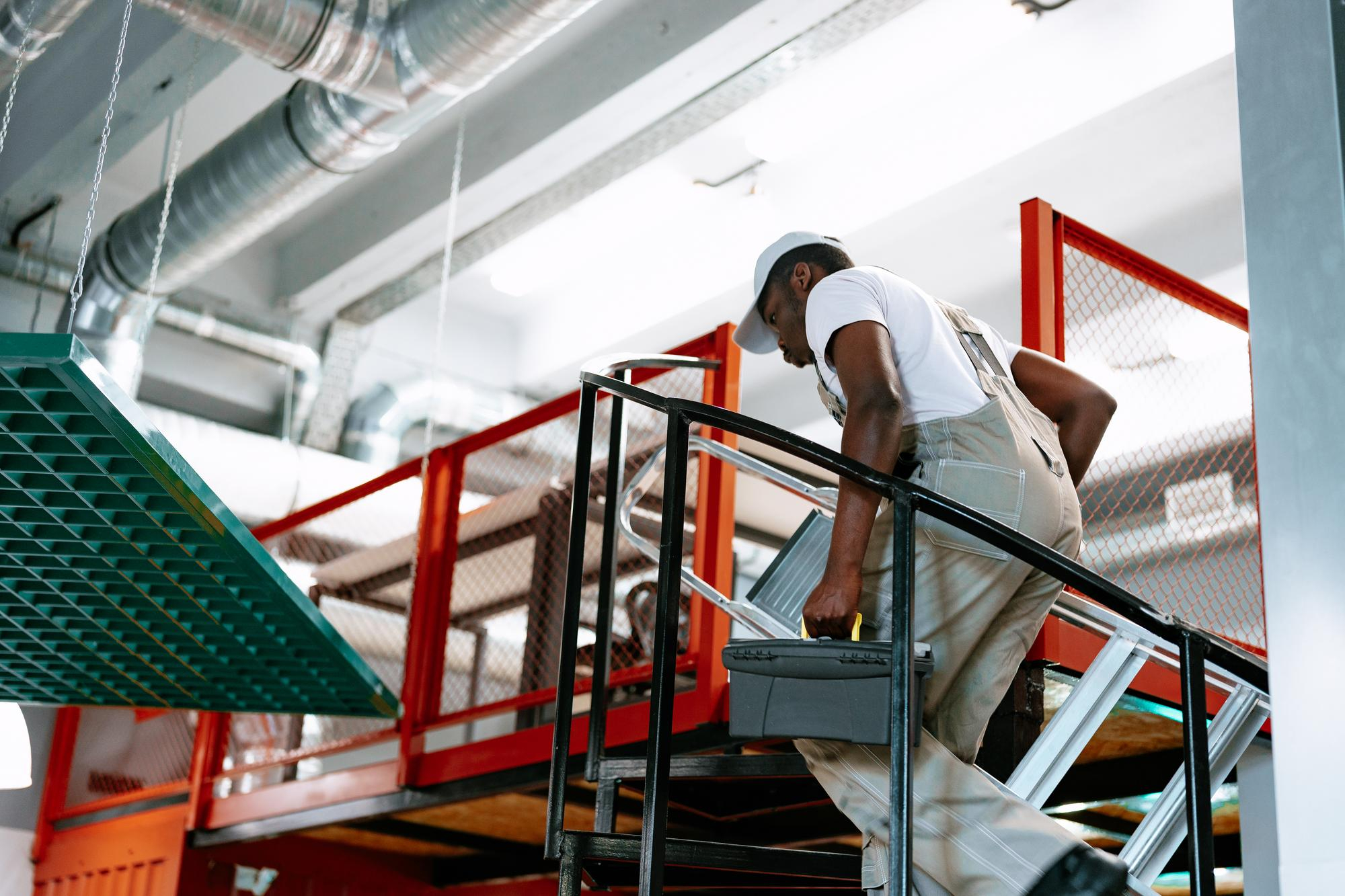
3 core fire suppression systems
Stat-X · ICAF · Sprinkler & Deluge
Ghana National Fire Council
National Fire Protection Association
American Fire Sprinklers Association
Ghana National Electro-technical Committee
About JSE
Our Systems
The Process
Maintenance & Support
Compliance & Standards
Pricing & Quotes
Can't find your answer?
Our technical team answers enquiries directly — no call centers, no scripts.